%20(1).png)

See why mentorship and clinical care work better together in recovery. Find out what professional addiction treatment in South Carolina really looks like.
Recovery looks different for everyone, but there's one thing that shows up consistently in the research: people do better when they have both professional clinical support and a real human connection with someone who has walked the same path. That combination sits at the heart of professional addiction treatment in South Carolina that actually moves the needle long-term.
This article looks at why mentorship and clinical care are stronger together, what each one contributes, and what you can expect when a program brings both into the same space.
When you enter an addiction treatment center in South Carolina, the clinical side of your care covers a lot of ground. Therapists work with you on the underlying causes of your substance use, whether that's trauma, mental health conditions, or patterns of thinking and behavior that have kept you stuck. Medical staff manage any physical components of early recovery. Group programming builds skills you'll use outside the walls of treatment.
This is the backbone of any quality program, and it matters. Clinical care gives your recovery a structure that peer connection alone can't provide. The problem isn't that it's insufficient. The challenge is what happens in the hours and days between sessions, when the real-life pressure of staying sober hits and there's no therapist available.
That's where mentorship fills a specific and important gap in professional addiction treatment in South Carolina.
A mentor in a recovery context isn't a therapist, and they're not trying to be. They're someone who has been through treatment, navigated early sobriety, and built a stable life in recovery. What they offer you is something clinical care can't replicate: proof that what you're trying to do is possible, delivered by someone with real credibility on the subject.
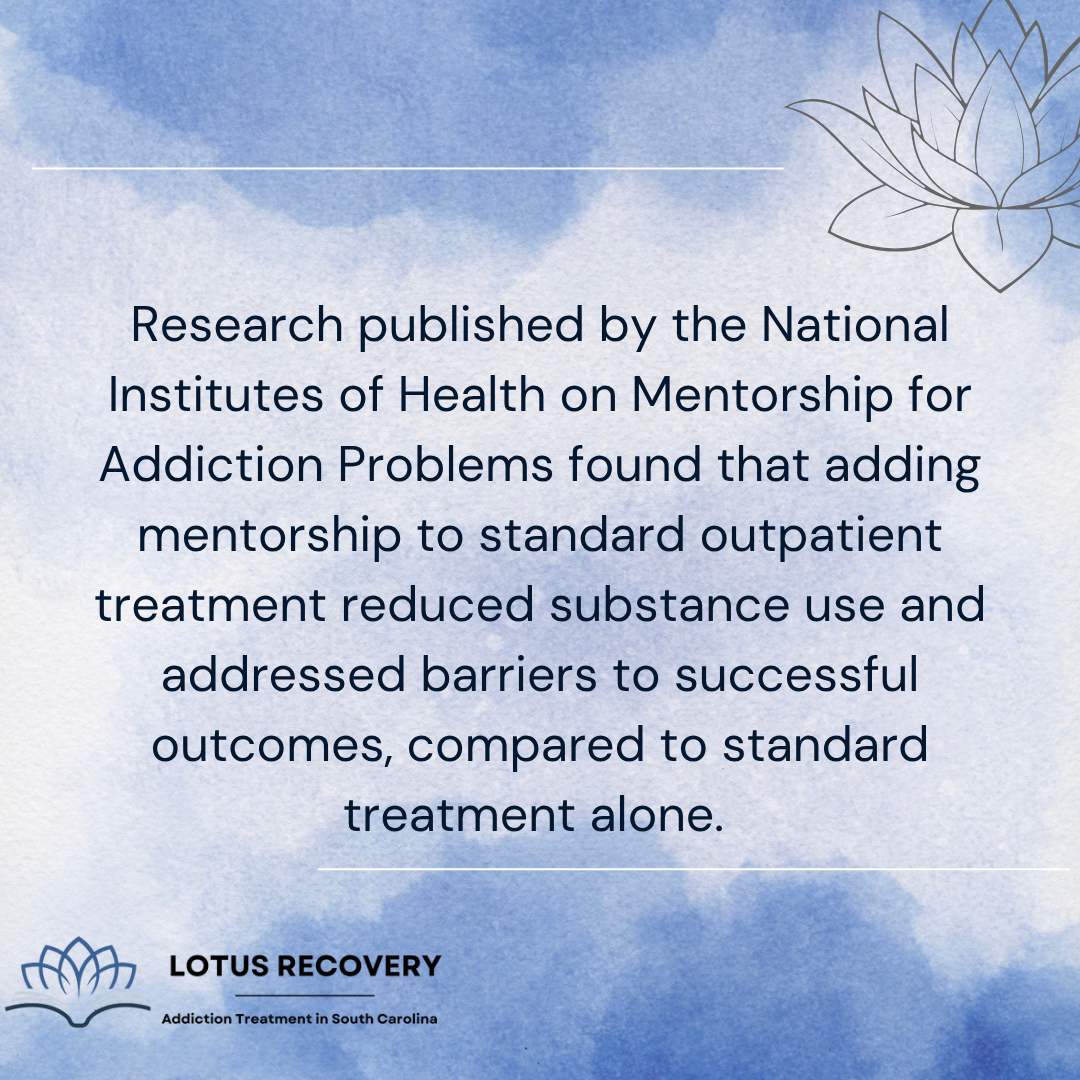
Research published by the National Institutes of Health on Mentorship for Addiction Problems found that adding mentorship to standard outpatient treatment reduced substance use and addressed barriers to successful outcomes, compared to standard treatment alone. This suggests that mentorship isn't just a nice add-on. It changes what treatment can do.
Here's what that looks like in practice for you:
The value of combining mentorship addiction treatment SC approaches with clinical care is that each one addresses something the other can't.
Clinical care gives you the therapeutic tools, the psychological framework, and the professional oversight that keep you safe and moving forward. Mentorship gives you the relational grounding, the lived-experience perspective, and the day-to-day human connection that makes those clinical tools feel more usable in real life.
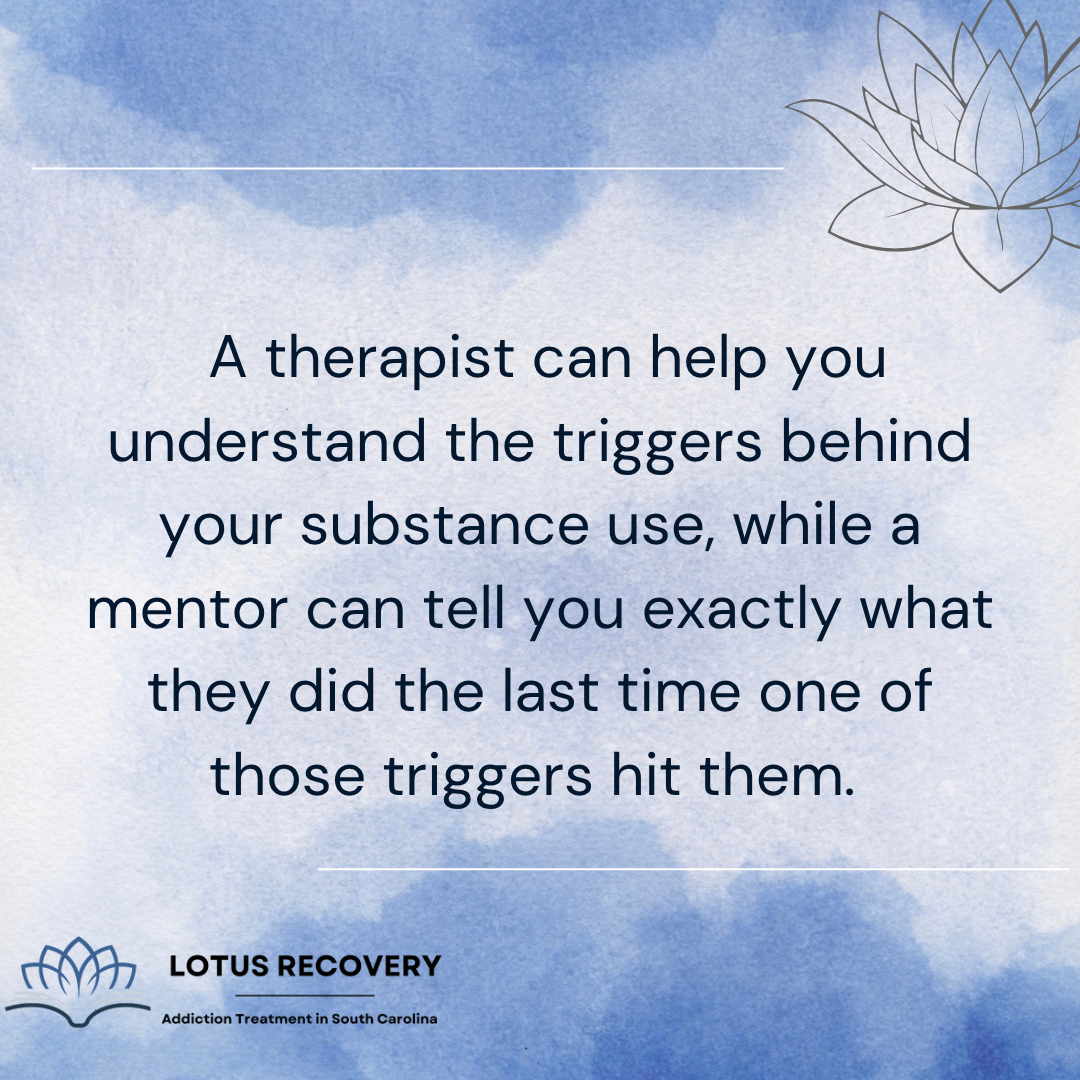
Think about it this way: A therapist can help you understand the triggers behind your substance use, while a mentor can tell you exactly what they did the last time one of those triggers hit them. Both conversations matter. They're just doing different things.
In a PHP in South Carolina that integrates both, you're not choosing between professional guidance and personal connection. You're getting both working in the same direction at the same time.
A partial hospitalization program in South Carolina sits at an intensive level of care, typically involving several hours of programming per day. You're spending significant time in treatment, which means the relationships and support structures you build there have a real opportunity to take root.
That also makes PHP one of the most effective moments to introduce mentorship. You're engaged and present in your recovery in a way that's harder to sustain as treatment intensity decreases. Building a mentorship relationship during PHP treatment South Carolina means you're not starting from scratch when you step down to a lower level of care. The connection is already there.
Clinical mentorship recovery SC programs that layer mentorship into intensive levels of care tend to see stronger transitions to outpatient treatment and better long-term engagement because of this. The relational continuity matters.
If you're evaluating South Carolina drug addiction treatment options and you want to know whether mentorship is genuinely integrated rather than listed as a program feature that doesn't actually show up in daily care, there are a few things worth asking.
The answers tell you whether mentorship is a real part of how care is delivered or just a bullet point on a website.

In a South Carolina drug addiction treatment clinic, clinical care and mentorship each fill a gap that the other can't.
Therapy gives you the tools, the framework, and the professional oversight to understand and address your substance use. Mentorship gives you the lived-experience connection, the real-time accountability, and the proof that recovery is actually livable. When a program brings both into the same space, especially at an intensive level of care like PHP, you're not just building skills. You're building the relationships and the support infrastructure that carry you through once formal treatment ends.
At Lotus Recovery, mentorship and clinical care aren't kept in separate lanes. They're part of the same approach to professional addiction treatment in South Carolina, built around the idea that what happens between sessions is as important as what happens during them.
If you're ready to start or want to learn more about how our programs work, reach out to our team today.

Medical Reviewer
David is the Executive Director at Lotus Recovery with over 27 years of experience in addiction and mental health treatment. He holds a Bachelor’s degree in Psychology from Edinboro University of Pennsylvania and a Master’s degree in Psychology from Capella University. David is a Certified Clinical Supervisor in both South Carolina and Pennsylvania and has served on Opioid Task Force Teams in Erie, PA and Buffalo, NY, with leadership experience across multiple levels of care in several states.
.webp)
.jpg)
.webp)